 Master Cheongun from a small hermitage at Sindoan on Gyeryongsan, Chungcheong“Haha, there is no need to rush. I am eighty-two years old and still have good 10-year luck cycles left ahead of me, so sit back and listen closely.”
The Meaning of Saju and the Four Pillars
Saju literally means four pillars. It refers to your year, month, day, and hour of birth, each standing as a distinct pillar.
Each pillar pairs a Heavenly Stem at the top with an Earthly Branch at the bottom, making eight characters in total. This is why it is called your Four Pillars and eight characters. The study of reading the flow of life through these eight characters is called Myeongri.
Yin-Yang, the Five Elements, and the Sixty-Year Cycle
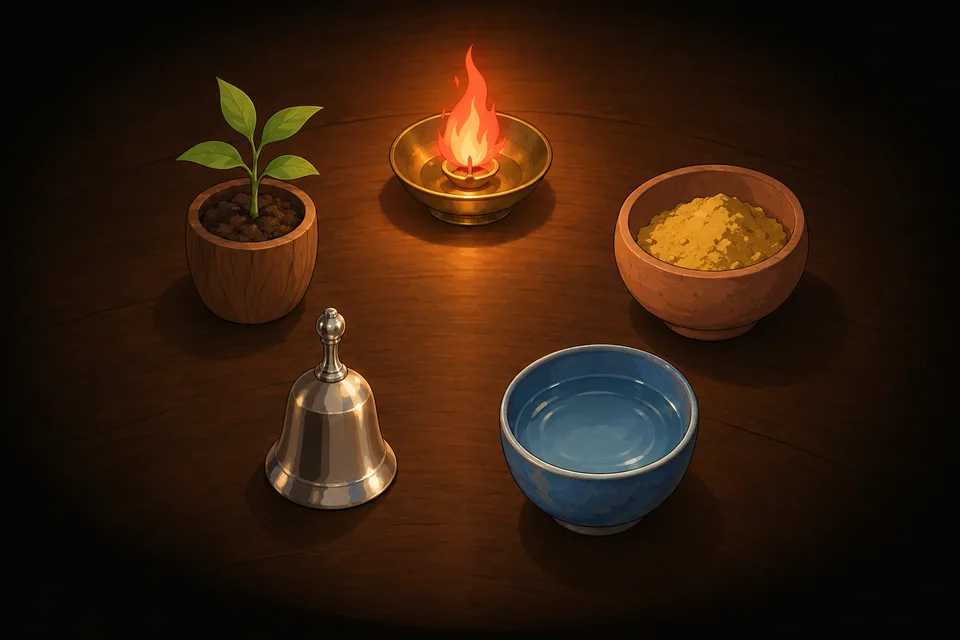
Saju is built upon Yin-Yang and the Five Elements: Wood, Fire, Earth, Metal, and Water. The ten Heavenly Stems representing sky energy and the twelve Earthly Branches representing earth energy interlock and turn together.
The ten Heavenly Stems from Yang Wood to Yin Water pair with the familiar twelve Earthly Branch animals to form sixty unique pairs. Together, these characters build your unique birth chart.
Zodiac Animals, the Day Master, and the Flow of Luck
People often identify with their Korean zodiac animal, but that is merely the Year Branch, only one small piece of your saju. The character that truly represents you is your Day Master, the top character of your Day Pillar.
By checking the balance among the Five Elements across your eight characters, you can understand your natural temperament. Adding the 10-year luck cycle and the year's luck lets you read the seasons of your life.
Saju in Daily Life and How to Approach It
Saju has long been used to check marital compatibility, read New Year fortunes, or consult traditional annual guides. For generations, people have also turned to it to choose auspicious moving dates, open businesses, or name newborns.
Saju does not lock you into a fixed destiny. Instead, it serves as a guide to understanding your natural foundation. Use it like a weather forecast for the seasons of life, helping you make wise choices at the right time.
How to Look Up Your Own Saju
To find your saju, first enter your birth date and time into the Korean perpetual calendar to convert them into your eight characters. You can use either the solar or lunar calendar, and you can adjust for birth location time differences and daylight saving time.
In saju, a new year does not begin on January first or Lunar New Year, but around Lichun, the start of spring. Months are also marked by the twelve solar terms, so check your perpetual calendar to see your solar term and discover your Day Master.
FAQ
Can I still read my saju if I do not know my birth time?
If you do not know your birth time, you can still read your chart using the remaining six characters without the Hour Pillar. Six characters are more than enough to reveal your natural temperament and the major cycles of your life.
Why am I assigned the previous year's zodiac animal if I was born in January?
In saju, the new year begins around Lichun, the start of spring, rather than January first or Lunar New Year. If you were born before Lichun, around February fourth, you carry the animal sign and energy of the previous year.
Do other cultures also read saju?
Rooted in the same tradition, the study of these principles is known as bazi or eight characters in China. In Japan, it has long been practiced under the name of four pillars astrology as a way to understand the course of life.
Saju Basics, Other Stories
 What Are Yin-Yang and the Five Elements: The Five Energies at the Root of Saju
 What Are Heavenly Stems and Earthly Branches? The Building Blocks of Your Eight Characters
 What Is the Day Master? The Character That Is You in Saju
 What Are the Ten Gods? Your Bonds with People, Money, and Work
 The 10-Year Luck Cycle and the Year's Luck: Life's 10-Year Seasons and This Year's Weather
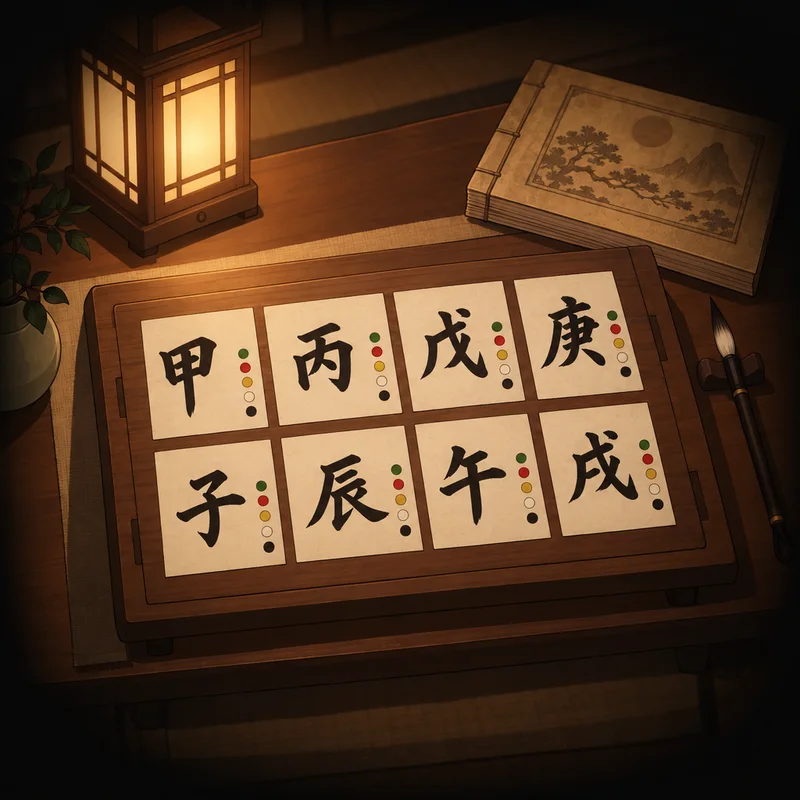 What Are Combination and Clash? How Characters Attract and Collide
 How to Read Saju: Five Steps to Understand Your Four PillarsStrong vs Weak Day Master: How to Read Your Inner StrengthWhat Is the Useful God? Finding the Element Your Chart Truly Needs
 What Is the Peach Blossom Star? The Star of Charm and Popularity
 What Is the Traveling Horse Star? The Birth Chart That Thrives on Movement
 What Is Samjae? Entering, Staying, and Leaving Samjae Years by Zodiac Sign
 What Is the Canopy Star? The Star of Deep Focus
 What Is the White Tiger Star? Strong Drive and What to Watch For
 What Is Kuei Kang? Four Day Pillars with Natural Leadership
 What Is the Nobleman Star? The Precious Helper Who Appears in a Crisis
 What Is the Void? The Two Empty Seats in Your Saju
 Resentment Pair Star: Zodiac Signs and Compatibility That Turn from Love to BitternessWhat Is the Goat Blade Star? The Real Meaning of an Energy as Sharp as a BladeThe Twelve Life Stages: The Twelve Cycles of Energy
 How to Pick a Moving Date: Spirit-Free Days and Your Saju
 Wedding Date Selection: The Basics of Picking an Auspicious Day
 How to Pick an Opening Date: Finding a Good Day to Open Your DoorsBaby Name Five Elements: How to Name Your Child Based on SajuHow to Find Your Lucky Color: The Right Colors and Directions for Your Saju