 Master Cheongun from a small hermitage at Sindoan on Gyeryongsan, Chungcheong“Haha, there is no need to rush. I am eighty-two years old and I still have 10-year luck cycles left to go, so have a cup of tea and take your time.”
Write Down the Four Pillars and Eight Characters from Your Birth Info
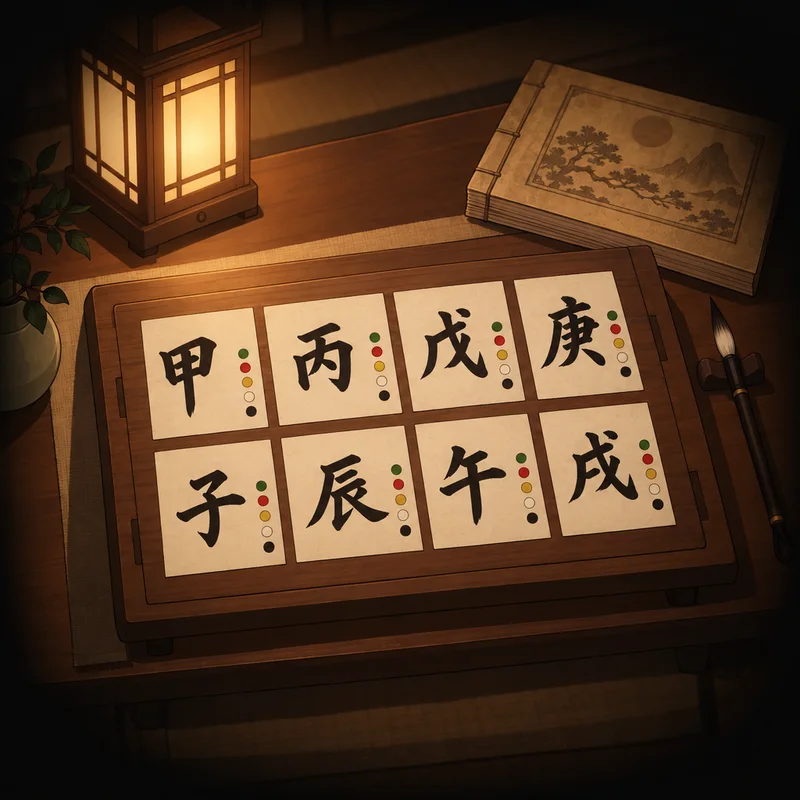
To read your saju, you first need to convert your birth year, month, day, and hour using the Korean perpetual calendar. Based on this information, four pillars are formed: the Year Pillar, Month Pillar, Day Pillar, and Hour Pillar.
Each pillar is divided into a Heavenly Stem on top and an Earthly Branch on the bottom, making eight characters in total. If you do not know your birth hour, you can still read your chart using six characters by leaving out the Hour Pillar.
Find the Real You in the Top Character of the Day Pillar
Once you lay out your eight characters, the very first thing to find is the Day Master, which is the top character of your Day Pillar. The character sitting in this Day Master spot represents the main character of your chart and the real you.
People often know only their Korean zodiac animal from their birth year, but that animal is merely the bottom character of your Year Pillar. To truly understand yourself, you must look at your Day Master first.
Check the Balance of the Five Elements: Wood, Fire, Earth, Metal, and Water
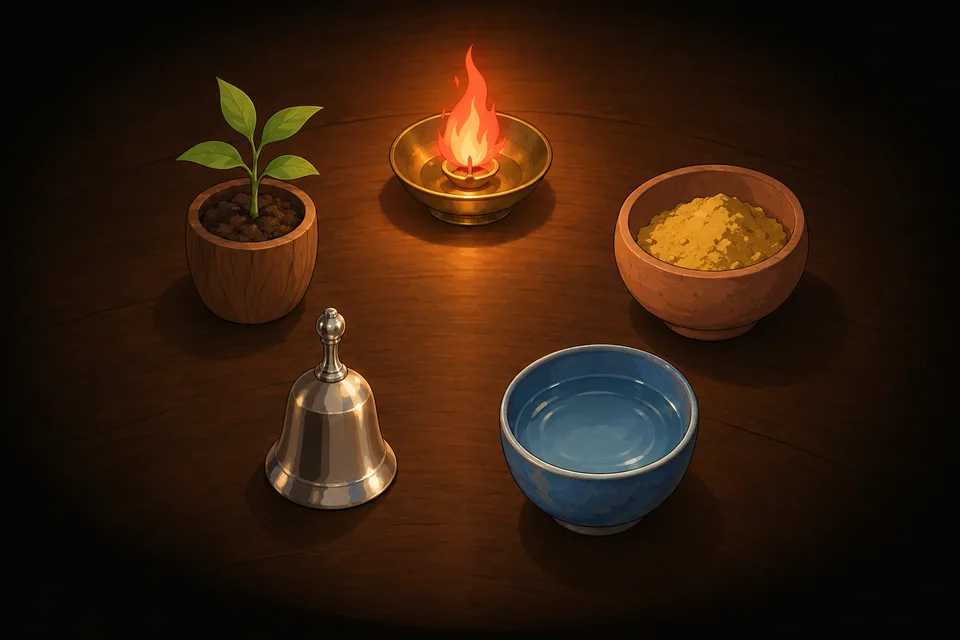
After identifying your Day Master, count the five energies of Wood, Fire, Earth, Metal, and Water present in your chart. In this step, you take a quick look to see which elements are abundant and which are lacking in your characters.
By checking whether the elements are balanced or leaning to one side, you can understand the natural flow of your innate energy, just like reading the weather or the seasons.
Read People, Money, Work, and Study Through the Ten Gods
Based on your Day Master, the relationships with the other characters are given roles called the Ten Gods. These are Friend, Rob Wealth, Eating God, Hurting Officer, Indirect Wealth, Direct Wealth, Seven Killings, Direct Officer, Indirect Resource, and Direct Resource.
Through these ten roles, you can picture how people, money, work, and study are positioned in your life.
Read the Flow of Timing Through 10-Year Luck Cycles and the Year's Luck
Over your innate characters, the 10-year luck cycle that changes every decade and the year's luck that arrives annually flow together. When these moving cycles meet your eight characters, they form combinations that help you or clashes that bump against you.
By watching where combinations and clashes occur, you can anticipate when to move forward and when to pause for a breath, just like sensing the changing of the seasons.
How to Read This in Your Own Chart
When you enter your birth date and time into the Korean perpetual calendar, your unique Four Pillars and eight characters will unfold right away. Your personal reading begins the moment you check your Day Master, the top character of your Day Pillar.
Take your time to see which elements you might lack and how the year's luck interacts with your characters, and meet the flow of your life directly.
FAQ
Can I not read my saju at all if I do not know my birth hour?
Even if you do not know your birth hour, you can still read plenty with the remaining six characters. There is no problem in checking your Day Master and the overall balance of your innate elements, so you do not need to worry.
How is saju different from fortune readings based on my Korean zodiac animal?
Your zodiac animal comes from just one character, the Year Branch, which is only a small fraction of your full chart. Saju reveals the whole picture only when you look at all eight characters together, centered around the Day Master that represents you.
Is it bad if a specific element is missing from my saju?
Missing an element does not automatically mean something is bad or wrong. A lacking element can often be filled in by the shifting 10-year luck cycle or the year's luck, so it is best to look at the flow of timing together.
Saju Basics, Other Stories
 What Is Saju? The Meaning of the Four Pillars and How to Read Them
 What Are Yin-Yang and the Five Elements: The Five Energies at the Root of Saju
 What Are Heavenly Stems and Earthly Branches? The Building Blocks of Your Eight Characters
 What Is the Day Master? The Character That Is You in Saju
 What Are the Ten Gods? Your Bonds with People, Money, and Work
 The 10-Year Luck Cycle and the Year's Luck: Life's 10-Year Seasons and This Year's WeatherWhat Are Combination and Clash? How Characters Attract and CollideStrong vs Weak Day Master: How to Read Your Inner StrengthWhat Is the Useful God? Finding the Element Your Chart Truly Needs
 What Is the Peach Blossom Star? The Star of Charm and Popularity
 What Is the Traveling Horse Star? The Birth Chart That Thrives on Movement
 What Is Samjae? Entering, Staying, and Leaving Samjae Years by Zodiac Sign
 What Is the Canopy Star? The Star of Deep Focus
 What Is the White Tiger Star? Strong Drive and What to Watch For
 What Is Kuei Kang? Four Day Pillars with Natural Leadership
 What Is the Nobleman Star? The Precious Helper Who Appears in a Crisis
 What Is the Void? The Two Empty Seats in Your Saju
 Resentment Pair Star: Zodiac Signs and Compatibility That Turn from Love to BitternessWhat Is the Goat Blade Star? The Real Meaning of an Energy as Sharp as a BladeThe Twelve Life Stages: The Twelve Cycles of Energy
 How to Pick a Moving Date: Spirit-Free Days and Your Saju
 Wedding Date Selection: The Basics of Picking an Auspicious Day
 How to Pick an Opening Date: Finding a Good Day to Open Your DoorsBaby Name Five Elements: How to Name Your Child Based on SajuHow to Find Your Lucky Color: The Right Colors and Directions for Your Saju