

 Master Cheongun from Gyeryongsan“Haha, take it easy! Even at eighty-two, I never get bored because Tojeong Bigyeol gives you a fresh reading every single year.”
Meaning of Tojeong Bigyeol and How to Read It
Tojeong Bigyeol is a traditional Korean yearly fortune-telling guide named after Joseon scholar Yi Ji-ham, whose pen name was Tojeong. Historical records suggest the book in its current form was compiled around the mid-nineteenth century.
Using your lunar birth date and the year you want to check, you calculate three numbers to find one of 144 hexagrams. The text for that hexagram reveals the overall flow of the year as well as the good and bad fortune for each lunar month.
Calculation Method and the Three-Digit Hexagram Number
A Tojeong Bigyeol hexagram number is a three-digit figure formed by combining the upper, middle, and lower digits in order, ranging from 111 to 863. There are eight possibilities for the first digit, six for the second, and three for the third, making 144 hexagrams in total.
The first digit is the remainder when your Korean age (the target year minus your lunar birth year, plus one) added to the year's assigned number is divided by 8. For 2027 (the Yin Fire Goat year), the assigned number is 19. If the remainder is 0, it counts as 8.
The second digit is the remainder when the number of days in your lunar birth month for that year (29 or 30 days) added to that month's assigned number is divided by 6. The third digit is the remainder when your lunar birth date added to that day's assigned number is divided by 3. If the remainder is 0, the second digit becomes 6 and the third digit becomes 3.
For example, someone born on the lunar date April 21, 1990 gets hexagram 163 in 2027, while someone born on lunar January 1, 1985 gets hexagram 662. Because your age increases by one each year and the monthly day counts and daily characters change, your hexagram number updates every single year.
Differences Between Tojeong Bigyeol and Saju
Tojeong Bigyeol uses only your birth year, month, and day, leaving out your birth time entirely. Just as recorded in the Encyclopedia of Korean Culture, it uses these three factors to produce a single hexagram that outlines the broad seasonal weather of your year.
Saju, on the other hand, uses all eight characters including your birth hour to examine deeply how the energies of that year and month interact with you as a person. That is why two people born on the same day can have identical Tojeong Bigyeol hexagrams, yet have completely different saju charts if their birth hours differ.
How to Check Your Tojeong Bigyeol
If you only know your solar birth date, convert it to the lunar calendar first; if you already know your lunar date, entering it directly yields the most accurate result.
If you were born in a leap month, treat it as the regular month of the same number. If you were born on the 30th day of a lunar month that only has 29 days in the target year, base your calculation on the 29th day's character.
Paldo Saju's Tojeong Bigyeol calculator is in Korean only for now. To see how 2027 flows for your Korean zodiac animal, the 2027 horoscope by zodiac sign is the place to start.
FAQ
Can I check my Tojeong Bigyeol if I don't know my birth time?
Yes. Tojeong Bigyeol calculates your hexagram using only your birth year, month, and day, so your birth time is not needed. Anyone can check their yearly fortune as long as they have their lunar birth date.
Why does my Tojeong Bigyeol hexagram number change every year?
Because your Korean age increases by one each year, and the number of days in your lunar birth month and the day's characters also change. That is why your assigned hexagram among the 144 possibilities updates every new year.
How is it calculated if I was born in a leap month?
Traditional calculation methods do not include special rules for leap months. For this reason, Paldo Saju calculates leap-month birthdays using the regular month of the same number. If you were born in a leap fourth month, it is calculated as the regular fourth month.
Saju Basics, Other Stories
 What Is Saju? The Meaning of the Four Pillars and How to Read Them
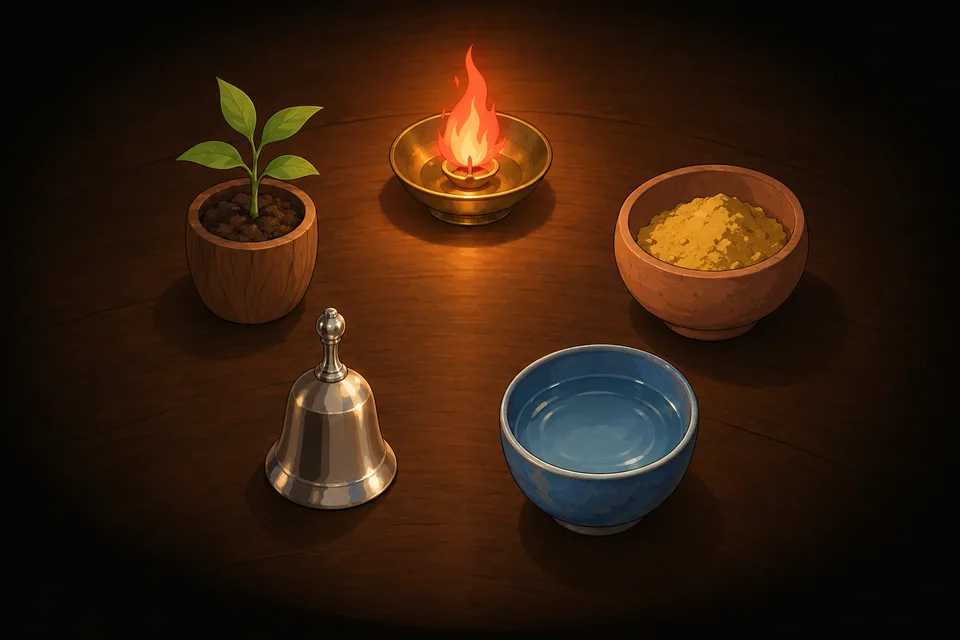 What Are Yin-Yang and the Five Elements: The Five Energies at the Root of Saju
 What Are Heavenly Stems and Earthly Branches? The Building Blocks of Your Eight Characters
 What Is the Day Master? The Character That Is You in Saju
 What Are the Ten Gods? Your Bonds with People, Money, and Work
 The 10-Year Luck Cycle and the Year's Luck: Life's 10-Year Seasons and This Year's WeatherWhat Are Combination and Clash? How Characters Attract and Collide
 How to Read Saju: Five Steps to Understand Your Four PillarsStrong vs Weak Day Master: How to Read Your Inner StrengthWhat Is the Useful God? Finding the Element Your Chart Truly Needs
 What Is the Peach Blossom Star? The Star of Charm and Popularity
 Red Flirt Meaning, Difference from Peach Blossom, and How to Find It
 No Chance of Getting Back Together: Signs in Saju That You Will Reconnect
 The Literary Star: Meaning, Rules, Day Pillars, and Differences from the Nobleman Star
 What Is the Traveling Horse Star? The Birth Chart That Thrives on Movement
 What Is Samjae? Entering, Staying, and Leaving Samjae Years by Zodiac Sign
 What Is the Canopy Star? The Star of Deep Focus
 What Is the White Tiger Star? Strong Drive and What to Watch For
 What Is Kuei Kang? Four Day Pillars with Natural Leadership
 What Is the Nobleman Star? The Precious Helper Who Appears in a Crisis
 What Is the Void? The Two Empty Seats in Your Saju
 Resentment Pair Star: Zodiac Signs and Compatibility That Turn from Love to BitternessWhat Is the Goat Blade Star? The Real Meaning of an Energy as Sharp as a BladeThe Twelve Life Stages: The Twelve Cycles of Energy
 How to Pick a Moving Date: Spirit-Free Days and Your Saju
 Wedding Date Selection: The Basics of Picking an Auspicious Day
 How to Pick an Opening Date: Finding a Good Day to Open Your DoorsBaby Name Five Elements: How to Name Your Child Based on SajuHow to Find Your Lucky Color: The Right Colors and Directions for Your Saju